Skip to content

At Bundaberg Hearing, we are passionate about helping adults and children with their hearing needs and assessing whether hearing aids may be suitable. As Bundaberg’s only independent audiology clinic, we are well-positioned to help our patients find hearing aids that suit their lifestyle, budget, and day-to-day listening needs.
Whether you’re looking for hearing aids for the first time or your current devices are no longer serving you as you need them to, we can help.
Hearing aids have changed significantly in recent years, and modern devices offer far more features and capabilities than hearing aids from only a few years ago. But technology is only part of the journey to finding the right hearing aids. And that’s where we come in. We start with a hearing assessment in Bundaberg and work with each patient individually to deliver the right device.
How We Help You Choose the Right Hearing Aid
Choosing a new hearing aid is a significant decision, and there’s no single solution that fits all patients. Our clinicians work with you to identify your needs before making any recommendations.
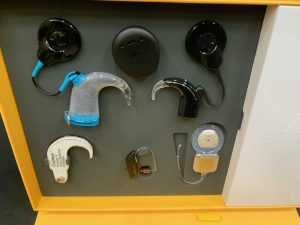
A selection of different hearing aid styles and designs available through Bundaberg Hearing.
The key factors we consider include:
- Your style preference and cosmetic concerns
- The anatomical shape of your ear canal
- Your degree of hearing loss and your type of hearing loss
- Rechargeable vs non-rechargeable hearing aids
- Problems with earwax and/or sweating
- What features and level of performance will meet your needs and budget
- What level of service and aftercare will meet your needs
- Your ability to manage the small devices
- What extra accessories will be needed to help you hear the TV, at meetings or in group conversations
- What drying system will you use to maximise the life of your hearing aids
Each one of these factors matters. Someone who works in a noisy environment will have different hearing aid requirements than someone who spends a lot of time at home. People with limited dexterity might find smaller devices tricky to handle and insert, while those who spend a lot of time on calls or watching TV might prefer Bluetooth integration in their hearing aids to make life easier.
From here, we also get a feel for the budget you’re working with, so we can identify devices in your price range and the typical features you can expect at that price point.
We’re not here to simply sell you a hearing aid; we’re here to find a solution that benefits your life without you feeling pressured into making the wrong decision.
Hearing Aid Fitting and Follow-up Care
Selecting the right hearing aid is only the beginning. At Bundaberg Hearing, we don’t just sell you a hearing aid and walk away. We’re here for every step that comes after.
We begin with the fitting process and ensure that your hearing aid has precise programming based on your audiogram, which is the result of your hearing assessment. We then verify the fit using real-ear measurements where appropriate. This confirms the device is delivering the right level of amplification for your specific ear canal.
We will explain everything thoroughly and answer any questions you might have before you leave.
Follow-up appointments are a normal part of the process, and we expect most people to need at least one or two appointments post-fitting to make adjustments as required. We welcome the feedback and work with you to fine-tune the programming as your brain adjusts to the amplified sound.
We are also here to assist you with cleaning and ongoing care of your hearing aid to help prevent damage and premature failure, too. We recommend regular appointments to ensure this is maintained.
If you need a hearing aid fitting in Bundaberg, contact us today.
Independent Hearing Advice
At Bundaberg Hearing, we operate as an independent hearing clinic. This means our recommendations are based on what is clinically appropriate for your hearing loss and lifestyle. We don’t hold contracts with a single manufacturer or operate under commercial sales targets. Our focus is on finding hearing aids that suit your needs, support your lifestyle and help you hear as well as possible in the situations that matter most to you. We give clear, realistic advice to each and every patient.
Funding and Eligibility
If the costs of hearing aids are a concern, there are several pathways that can reduce or cover the cost, depending on your circumstances.
Hearing Services Program (pensioners and eligible adults)
The Australian Government’s Hearing Services Program provides subsidised hearing services and devices to eligible Australians. Eligibility depends on your circumstances, including age, residency status and the type of concession or veteran card you hold. If you need pensioner hearing aids in Bundaberg, talk to us, and we can help you check whether you may qualify.


Veterans and DVA
Veterans holding a DVA Gold Card or a White Card for an eligible condition may be entitled to hearing services and hearing aids through the Department of Veterans Affairs. Entitlements depend on your circumstances. We can help veterans in Bundaberg understand their hearing aid options and available entitlements.
Private Health Insurance
Some private health insurance extras policies include a benefit for hearing aids. The amount covered will vary, and it’s not an option on all policies. We recommend checking with your health fund directly to confirm whether your policy includes a hearing aid benefit.
Self-Funded
For those self-funding hearing aids privately, we offer a range of technology levels that suit different price points. We will always explain costs clearly so you know exactly what you’re getting for your budget.
To find out which pathway suits your situation, book a hearing aid consultation and we can help you move forward.
Hearing Aid Features Guide
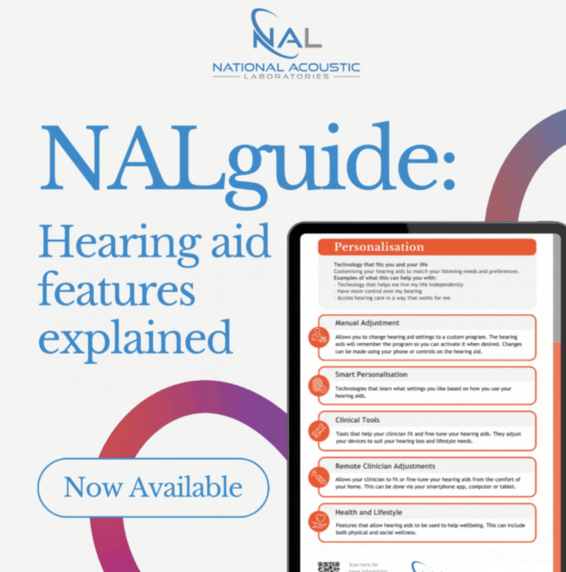
The NAL guide is designed to help people explore hearing aid features that may suit their listening needs, then discuss those options with their family and clinician. Clinicians can also use this guide to support the early stages of the client journey and when reviewing hearing goals and new technologies.
A wide range of hearing aid features has been broken down into six categories based on common listening needs.